Role: Lead Product Designer Duration: 4 sprints(8 weeks) Team: 1designer, 1 PM, 1 developer
Introduction
About the Project:
This project focused on designing IBM Cloud Reservations for Virtual Servers in Virtual Private Cloud (VPC), enabling enterprise customers to reduce cloud spend and gain predictable budgets. By offering 1and 3-year capacity reservations with significant discounts and flexible payment options, the solution helps organizations secure guaranteed capacity, minimize spending risk, and optimize cloud investment across IBM Cloud.
My role:
As a Senior UX Designer, I led the user-centered design process, engaging users through research and validation to ensure the experience met their needs. I collaborated with 3-in-a-box teams and guided implementation to deliver a seamless, high-quality user experience.
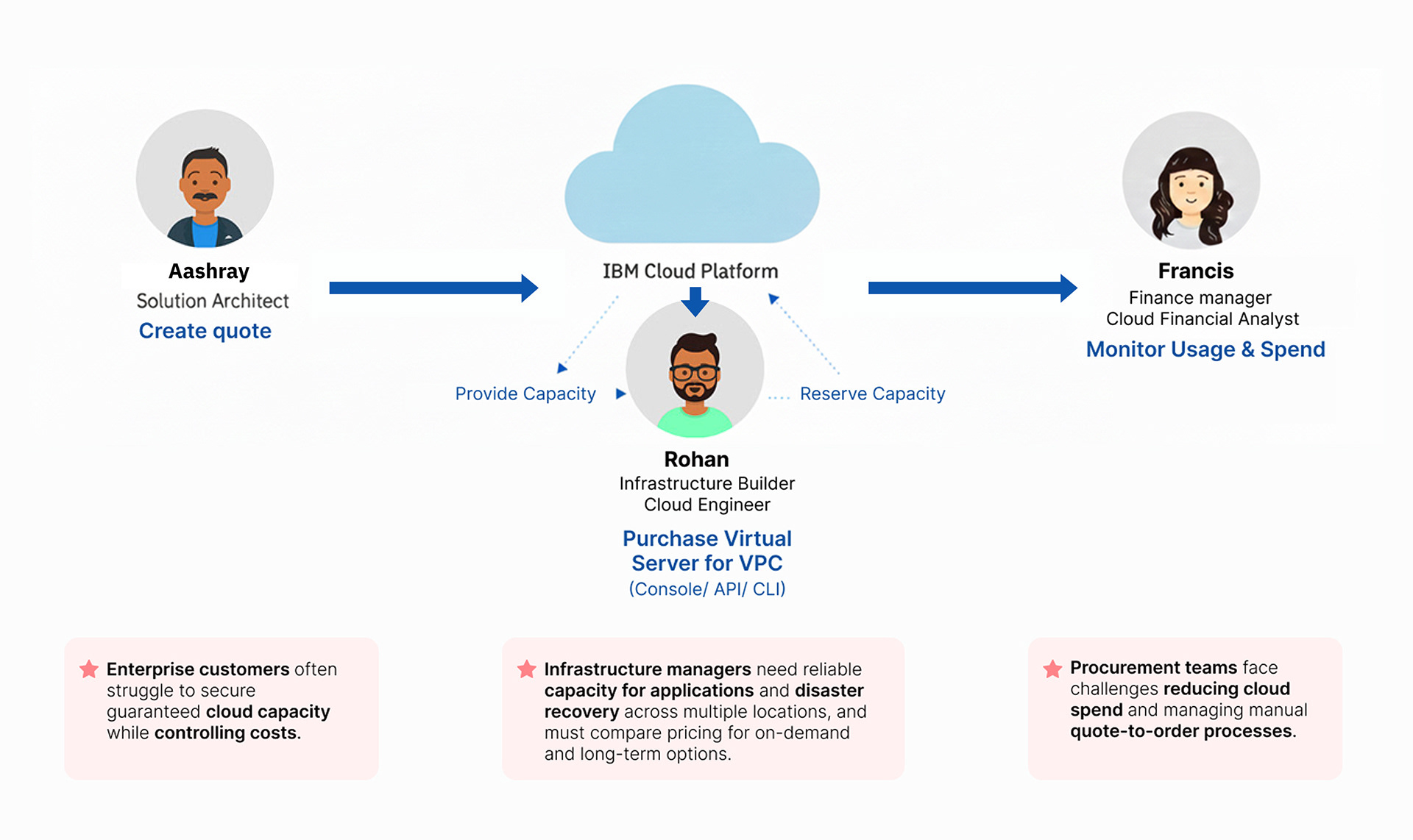
Challenge
Business Impact
This feature was prioritized to help IBM Cloud clients secure long-term discounts, drive retention, and support growth. Customers benefit from lower pricing for committed usage and a clear view to compare on-demand and long-term pricing across the platform.

Competitive Research

Goal:
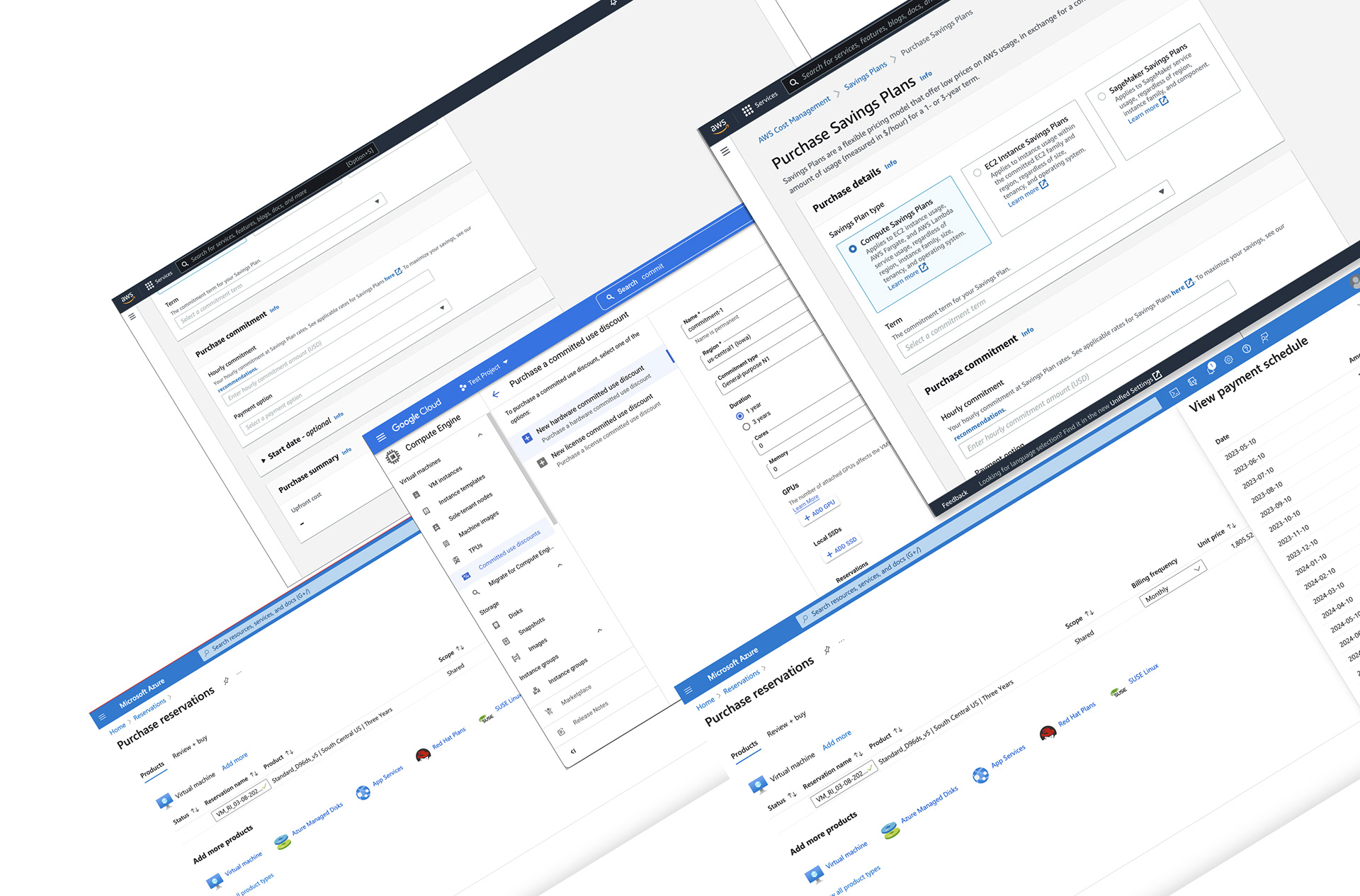
Identify competitive design, feature differentiators, and core pricing plan structures for cloud reservation management to inform UX strategy.
Identify competitive design, feature differentiators, and core pricing plan structures for cloud reservation management to inform UX strategy.
Key Results

Users Interviews
Participants

Key Findings from the User Interviews

Personas & Problem Statements- The Hill
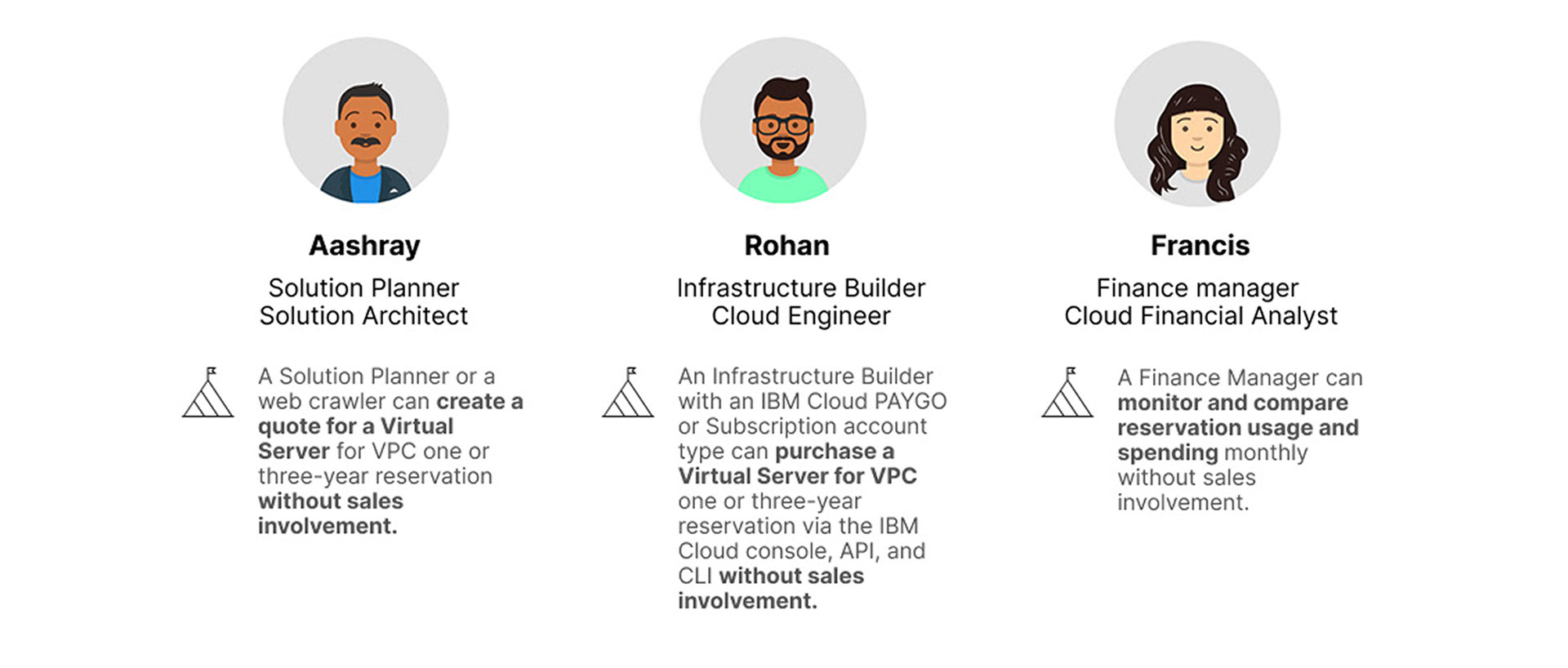
A Hill in IBM Enterprise Design Thinking is a clear statement that is drafted to position a team towards a common understanding of the goal needed to meet user needs.

Low-fidelity Prototype
We identified the key use cases and user actions that would guide the low-fi design direction.
Key Actions Users Can Perform:
•Self-service: Create a capacity reservation for all IBM Cloud hardware configurations via the IBM Cloud console without sales assistance.
•Choose between 1 or 3 years commitment options, with discounted pricing based on PAYGO rates.
•Reserve one or multiple unique hardware configurations in a single order.
•View discounted pricing in the console before checkout.
•Be notified if account quotas or service limits prevent the reservation, with guidance to resolve the issue.

The low-fi prototype received strong feedback from stakeholders—including Cloud designers, PMs, Cloud architects, and tech sellers—so we’re ready to move forward with the high-fidelity design.

High-fidelity Design & Usability Test
To support more realistic user testing, I transformed the low-fi designs into high-fi prototypes for a moderated test.
Usability test goal:
To design and optimize the user experience for a new VPC Reservations feature, ensuring the user journey matches expectations and identifying critical usability problems.
To design and optimize the user experience for a new VPC Reservations feature, ensuring the user journey matches expectations and identifying critical usability problems.
Participants: 5 (Cloud Architects, a Software Engineer, and IT Directors)
Key tasks: Participants were asked to complete tasks including creating, editing, and deleting reservations, attaching virtual servers to a reservation, and viewing billing and usage.
Key tasks: Participants were asked to complete tasks including creating, editing, and deleting reservations, attaching virtual servers to a reservation, and viewing billing and usage.


Other User Feedback

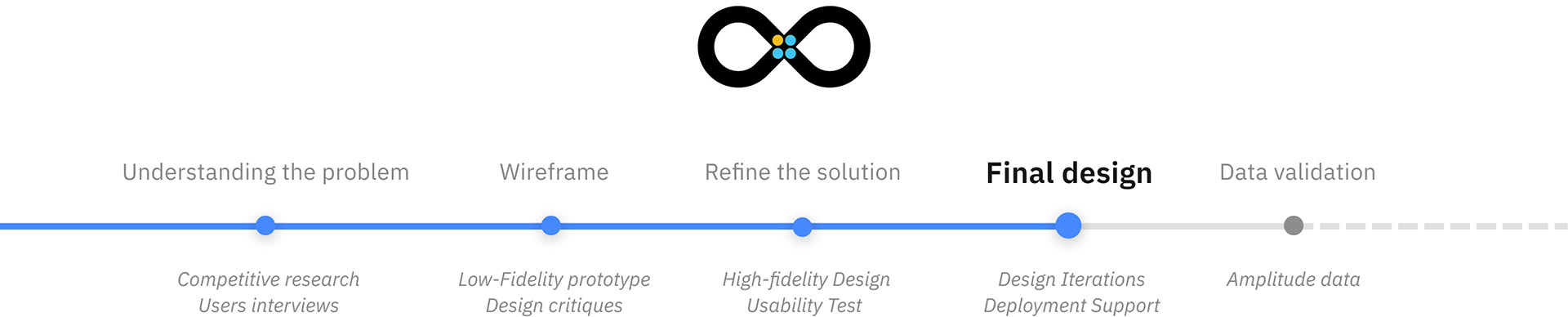
Final Design

Reservation provisioning flow

Reservation list view

Reservation details page- before attaching instances

Attaching instances to a reservation

Reservation details page with virtual server instances

Virtual server instance creating flow

Virtual server details page
Implementation Support
In this project, I led the implementation by fostering close collaboration among the product manager and developers. As a senior UX designer, I drove the project by conducting design support sessions and working closely with developers to ensure a smooth and efficient implementation. In later phases, I also supported the integration of reservations for other compute resources, such as Bare Metal Servers for VPC. This close teamwork resulted in a more intuitive user experience and noticeable improvements in conversion times.


From the Reservation retrospective meeting with all stakeholders, the design-related quote—“Almost all design was done before coding began. There was not much churn in the design while implementing it.”— received the highest score. This reinforced the value and impact of my design work.

Continuous User Performance Tracking
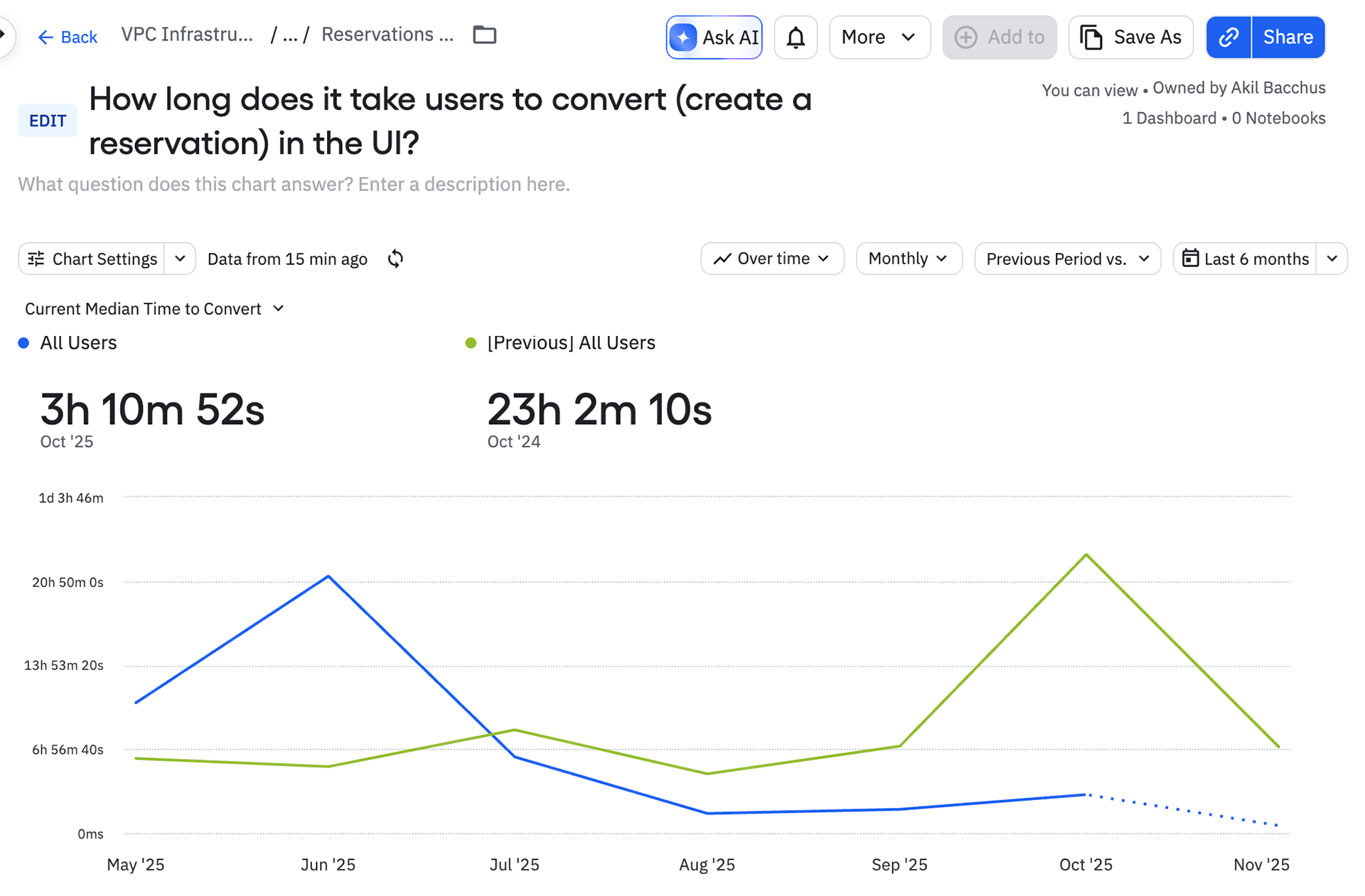
We continuously track user behavior in Amplitude to monitor performance and improve the experience over time. This 6 months snapshot shows a significant reduction in the time it takes users to create a reservation, highlighting how ongoing UX iterations have helped streamline the task and support faster conversions.
The End
This project brought real value by focusing on the needs of the users and fostering strong teamwork. As a result, we not only improved the user experience but also strengthened our market position. In the end, the project delivered meaningful outcomes and demonstrated the importance of collaboration and user-centric design.